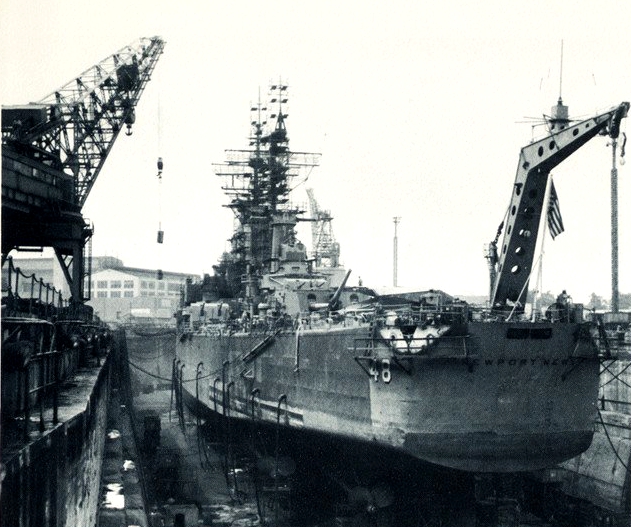
The Fletcher class consisted of 175 destroyers commissioned between 1942 and 1944 at Bath Iron Works, Federal Shipbuilding, Puget Sound Navy Yard, Todd Pacific, and other yards — the largest single class of destroyers ever built by the United States. The Fletcher class served as the primary destroyer of the WWII Pacific campaign, escorting carrier task forces, conducting shore bombardment, and screening amphibious landings from Guadalcanal to the final Pacific offensives. Many Fletcher-class ships continued in service through the Korean War and into the Cold War, with the last ships decommissioning in the mid-1970s. The Fletcher class’ WWII-era construction used asbestos throughout the steam engineering plant consistent with wartime construction standards.
WWII-Era Steam Plant Asbestos
Fletcher-class destroyers used steam turbine propulsion with WWII-era asbestos insulation:
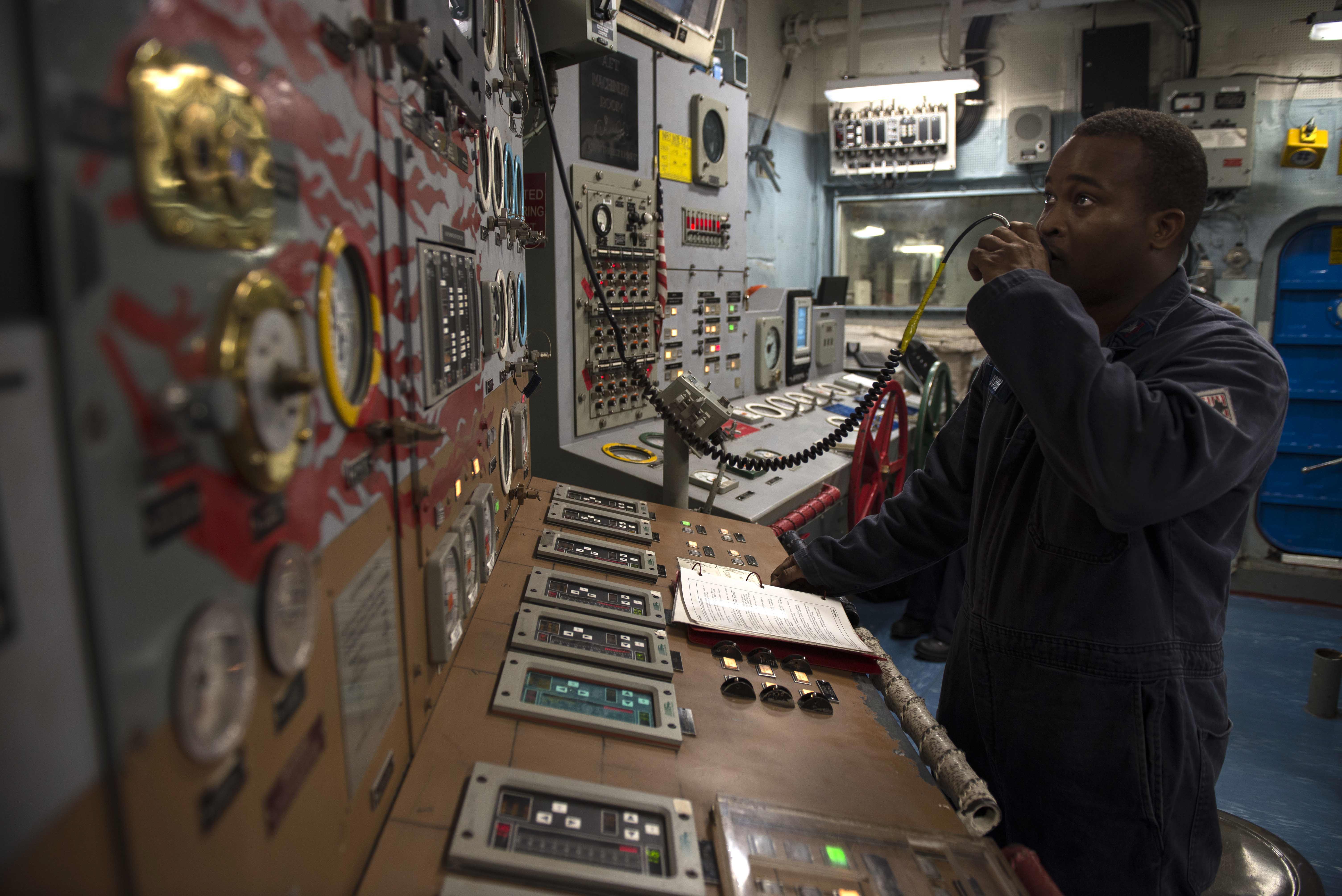
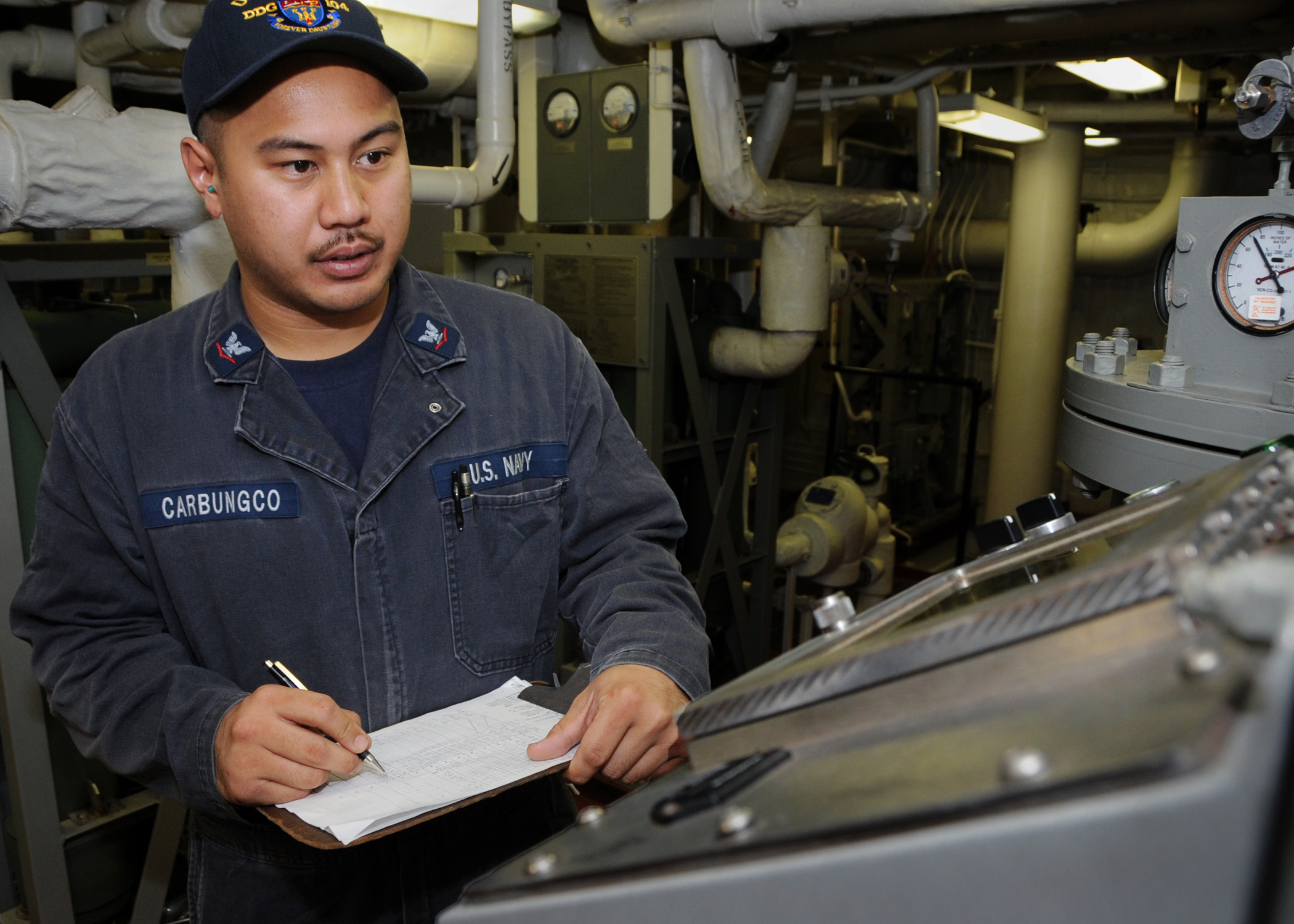
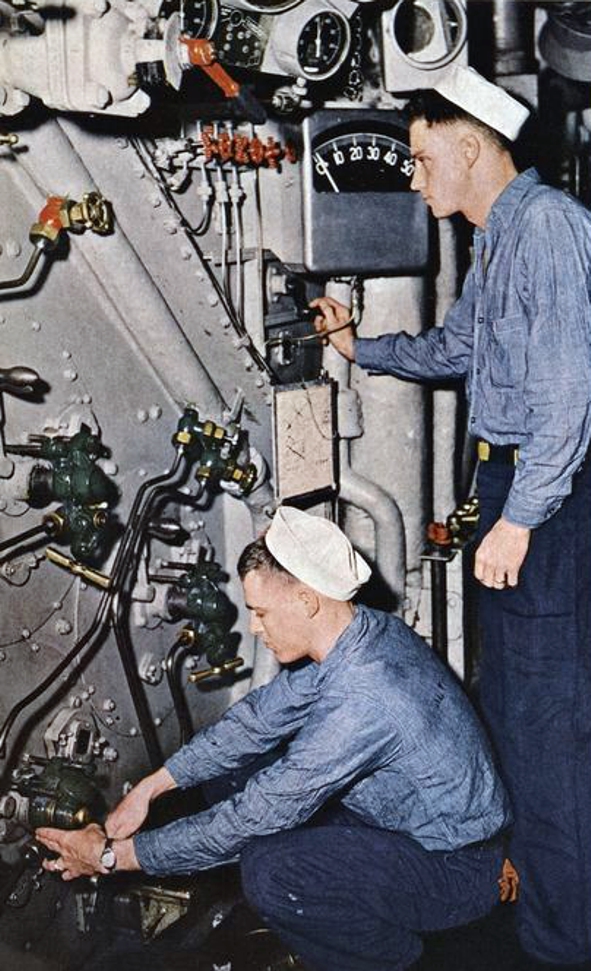
- Boiler plant — each Fletcher-class destroyer had two Babcock & Wilcox boilers with asbestos lagging on exterior surfaces, asbestos combustion chamber refractory brick, and asbestos rope and packing at boiler access doors and valve packing throughout the firerooms. BT ratings maintaining the Fletcher-class boiler plant performed lagging and refractory maintenance in the confined single-fireroom design of these 376-foot destroyers
- Main steam piping — the main steam piping from the Fletcher-class firerooms to the engineroom and to auxiliary steam consumers used asbestos magnesia pipe covering on the hot steam distribution piping throughout the engineering spaces. The compact Fletcher-class engineering arrangement concentrated the steam piping — and the asbestos pipe covering — in the limited overhead and bulkhead space of the destroyer hull
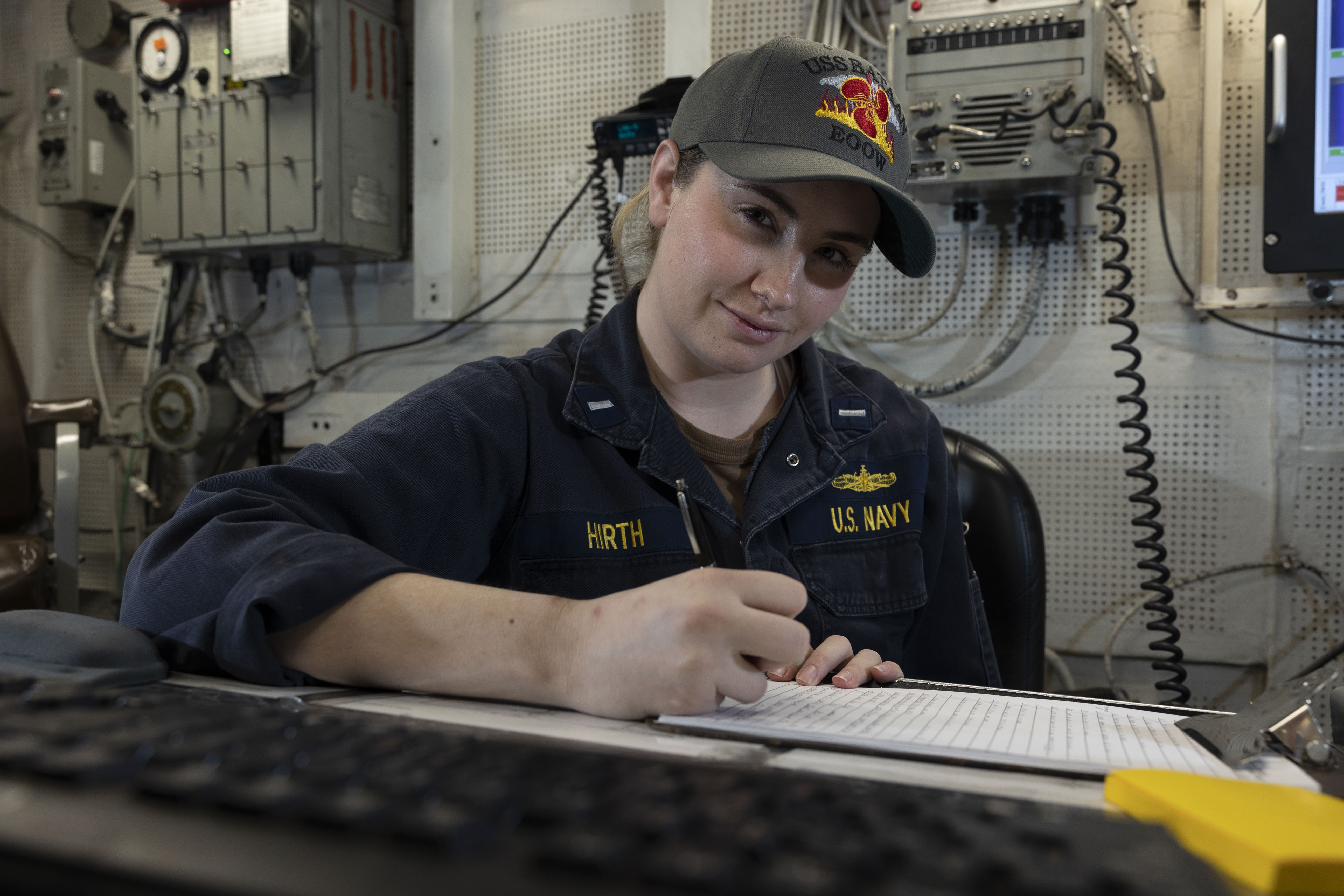
- Engineering auxiliaries — boiler feed pumps, steam-driven air ejectors, and ship’s service diesel generators used asbestos gaskets and packing materials in the MM and BT maintenance routines
WWII Combat Operations
Fletcher-class destroyers served in virtually every major WWII Pacific campaign:
- Engineering ratings on Fletcher-class destroyers maintained combat-tempo engineering plants across the Pacific campaign, standing sustained engineering watches in the confined firerooms and enginerooms under elevated operational temperatures that accelerated the deterioration of asbestos pipe covering insulation
Fletcher-Class Ships — Individual Exposure Pages
Each Fletcher-class ship below has its own service-history and shipboard asbestos-exposure page:
- USS Fletcher (DD-445)
- USS Radford (DD-446)
- USS Jenkins (DD-447)
- USS Nicholas (DD-449)
- USS Obannon (DD-450)
- USS Taylor (DD-468)
- USS Stanly (DD-478)
- USS Stevens (DD-479)
- USS Halford (DD-480)
- USS Leutze (DD-481)
- USS Ringgold (DD-500)
- USS Conway (DD-507)
- USS Cony (DD-508)
- USS Converse (DD-509)
- USS Eaton (DD-510)
- USS Foote (DD-511)
- USS Spence (DD-512)
- USS Terry (DD-513)
- USS Thatcher (DD-514)
- USS Anthony (DD-515)
- USS Wadsworth (DD-516)
- USS Walker (DD-517)
- USS Brownson (DD-518)
- USS Isherwood (DD-520)
- USS Kimberly (DD-521)
- USS Luce (DD-522)
- USS Sullivans (DD-537)
- USS Franks (DD-554)
- USS Haggard (DD-555)
- USS Hailey (DD-556)
- USS Smalley (DD-565)
- USS Stoddard (DD-566)
- USS Watts (DD-567)
- USS Wren (DD-568)
- USS Aulick (DD-569)
- USS Charles Ausburne (DD-570)
- USS Newcomb (DD-586)
- USS Bell (DD-587)
- USS Burns (DD-588)
- USS Izard (DD-589)
- USS Paul Hamilton (DD-590)
- USS Howorth (DD-592)
- USS Killen (DD-593)
- USS Hart (DD-594)
- USS Satterlee (DD-626)
- USS Kidd (DD-661)
- USS Clarence K Bronson (DD-668)
- USS Cotten (DD-669)
- USS Dortch (DD-670)
- USS Gatling (DD-671)
- USS Healy (DD-672)
- USS Hickox (DD-673)
- USS Hunt (DD-674)
- USS Lewis Hancock (DD-675)
- USS Marshall (DD-676)
- USS Mcdermut (DD-677)
- USS Mcgowan (DD-678)
- USS Mcnair (DD-679)
- USS Melvin (DD-680)
- USS Hopewell (DD-681)
- USS Porterfield (DD-682)
- USS Stockham (DD-683)
- USS Wedderburn (DD-684)
- USS Picking (DD-685)
- USS Halsey Powell (DD-686)
- USS Uhlmann (DD-687)
- USS Remey (DD-688)
- USS Wadleigh (DD-689)
- USS Norman Scott (DD-690)
- USS Mertz (DD-691)
VA Claims for Fletcher-Class Veterans
VA evaluates asbestos-related disability claims on a case-by-case basis. Veterans generally need evidence of in-service asbestos exposure, a current asbestos-related diagnosis, and a medical link between them. BT and MM ratings who served aboard Fletcher-class destroyers and have since been diagnosed with mesothelioma, asbestosis, or asbestos-related lung cancer may qualify for VA disability benefits.
The asbestos-containing products documented on U.S. Navy vessels and at shipyards are catalogued by manufacturer on AsbestosIndex. These records cross-reference which companies supplied which materials and to which facilities.
Navy Ratings Most Exposed to Asbestos Aboard Fletcher-Class Destroyers
The U.S. Department of Veterans Affairs and the public asbestos litigation record document that the following Navy ratings worked routinely in spaces where ACM was installed, maintained, ripped out, and replaced:
VA Disability Claims for Asbestos-Related Disease
The U.S. Department of Veterans Affairs evaluates asbestos claims individually. A veteran generally needs medical evidence of a current asbestos-related disease, service evidence supporting in-service asbestos exposure, and a medical opinion connecting the two. Ship assignments, Navy ratings, and equipment records can help document the exposure history but do not create automatic service connection.
Approved claims may provide monthly disability compensation and related benefits. Survivors may separately qualify for Dependency & Indemnity Compensation when the applicable requirements are met. Civil lawsuits and asbestos-trust claims use different standards; claimants should obtain individualized advice about how the processes interact.
How to file a VA disability claim: VA claims are filed directly with the U.S. Department of Veterans Affairs — not with a law firm. Start at VA.gov › Hazardous Materials Exposure, call 1‑800‑827‑1000, or get free help filing from a Veterans Service Organization: DAV, VFW, or American Legion.
VA Claims Guide on This Site › Compare: VA vs. Civil Lawsuit
Source notes: equipment-manifest entries (where shown) are sourced from public-record BUSHIPS (Bureau of Ships) documentation, NARA archives, and the public asbestos litigation record. Manufacturer attributions link to documented asbestos-product histories on AsbestosIndex.com where available. Nothing on this page constitutes medical or legal advice.